 Sigiriya Lion Rock Tours
Home › Guides › Sigiriya Water Gardens: What You See Before the Climb
Sigiriya Water Gardens: What You See Before the Climb
The Sigiriya Water Gardens are the ancient lawns, pools and fountains you cross on the way to the rock, and they are included in the same ticket as the climb, priced at $35 for a foreign adult according to the Central Cultural Fund. They are not the Water Garden Sigiriya resort, which is a separate luxury hotel nearby.
Quick answer The short answer on the water gardens
The water gardens sit between the entrance and the rock, and every visitor walks through them before the climb of about 1,200 steps. They are part of the ordinary Sigiriya ticket, so you pay no extra fee for them. The fountains still work in the rainy season, fed by gravity and underground pipes almost 1,500 years after they were built.
Key takeaways
- Book a sigiriya rock fortress tour and the gardens come first, before the steps.
- The fountains run during the rainy season, so visit then to see them working.
- Entry is 7:00 AM to 5:00 PM, so arrive early to beat the heat.
- The gardens are ancient ruins, not the Water Garden Sigiriya resort.
Is this page about the Water Garden Sigiriya resort?
No, this page is about the ancient water gardens at the foot of the rock, which are ruins you walk through on any Sigiriya visit.
Most search results for this phrase point to a hotel. The gardens most travellers mean are something else entirely.
Two different things with one name
The Water Garden Sigiriya is a luxury resort near Sigiriya with 30 spacious villas, some surrounded by water features. It has a spa and wellness center, a fitness center, an outdoor pool and free WiFi.
The ancient water gardens are 5th century ruins inside the Sigiriya rock fortress ticket area. You cannot skip them on a visit. Every path from the entrance to the climb crosses them.
If you want the hotel, book it directly. If you want the ruins, keep reading. If you want both, some travellers stay at the resort and visit the rock at opening time. The sigiriya rock fortress tour covers the ruins, not the hotel.
A note on the word price: searches like Sigiriya water gardens price usually mean either the entry ticket to the ruins or a room at the resort. The entry ticket to the ruins is $35 for a foreign adult on the Central Cultural Fund price list. The resort room rate is not stated here, and the resort publishes it on its own site and on booking platforms.
| Feature | Ancient water gardens | Water Garden Sigiriya resort |
|---|---|---|
| What it is | 5th century ruins at the foot of the rock | Luxury hotel with 30 villas |
| How you visit | On the standard Sigiriya entry ticket | Book a room or a meal |
| Facilities | Pools, fountains, moats, lawns | Spa, fitness center, outdoor pool, free WiFi |
| Cost | Sold with the Sigiriya ticket at the gate | Room rate not stated here |
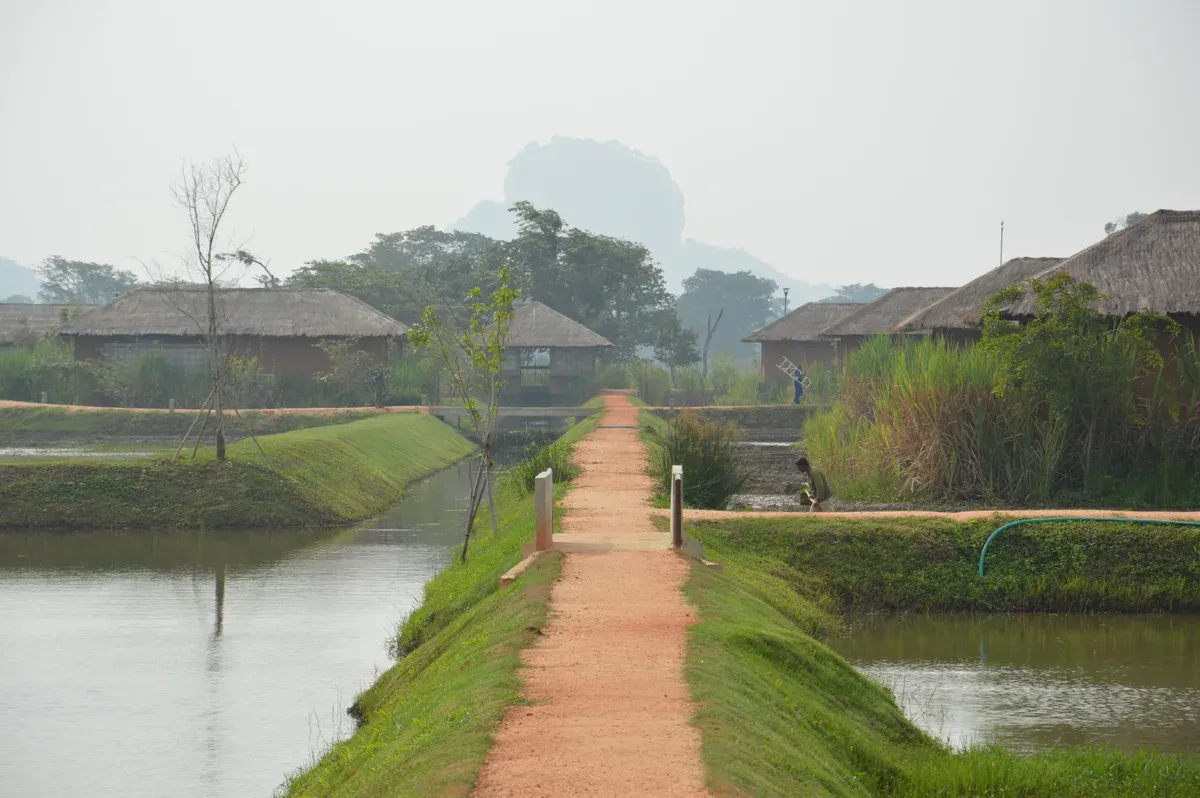
The water gardens on the western approach, with the rock at the end of the axis. Photo: VINUKR86, CC BY-SA 4.0, via Wikimedia Commons
What is so special about Sigiriya?
Sigiriya is a 5th century royal capital built on and around a granite rock, and its water gardens are considered the best-preserved in South Asia and some of the oldest landscaped gardens in the world.
The whole complex earned UNESCO status, and the gardens are a large part of why.
The claim to fame
Sigiriya dates back to 477 AD and was listed as a Unesco World Heritage Site in 1982. It attracted just over one million visitors in 2019.
The archaeologist Senake Bandaranayake described the site as three distinct but interlinked sections: the symmetrical water gardens, the asymmetrical cave and boulder garden, and the terraced garden circling the rock, plus a miniature water garden and the palace gardens on the summit.
The engineering is the special part. The water systems use hydraulic power, underground conduit terracotta pipes and gravitational force, and the fountains still function almost 1,500 years later. No pumps, no electronics, just slope and pipes.
The CCF, which manages the site, divides the western gardens into water gardens, boulder gardens and terraced gardens, the same three forms.
Sources: Central Cultural Fund, UNESCO World Heritage Centre.
Where the Gardens Sit Below the Rock
The western gardens run in a straight line from the west gate to the foot of the rock: water gardens first, then the boulder gardens, then the terraces where the climb begins.
- 1 Ticket control, west gateThe start of the garden axis.
- 2 Water gardensPools and fountains that still run in the rainy season.
- 3 Preaching RockA boulder in the boulder gardens.
- 4 Cobra Hood CaveA painted cave in the boulder gardens.
- 5 Boulder archWhere the path squeezes between boulders.
- 6 Fresco shelterMidway up the rock face.
- 7 Sigiriya TankThe reservoir south of the rock.
Numbers match the pins on the map.
Coordinates: OpenStreetMap. The garden pin marks the middle of the water garden axis. Dashed lines join the stops in order, not the footpath.
Tours That Fit
All of these start with the gardens and continue up the rock.
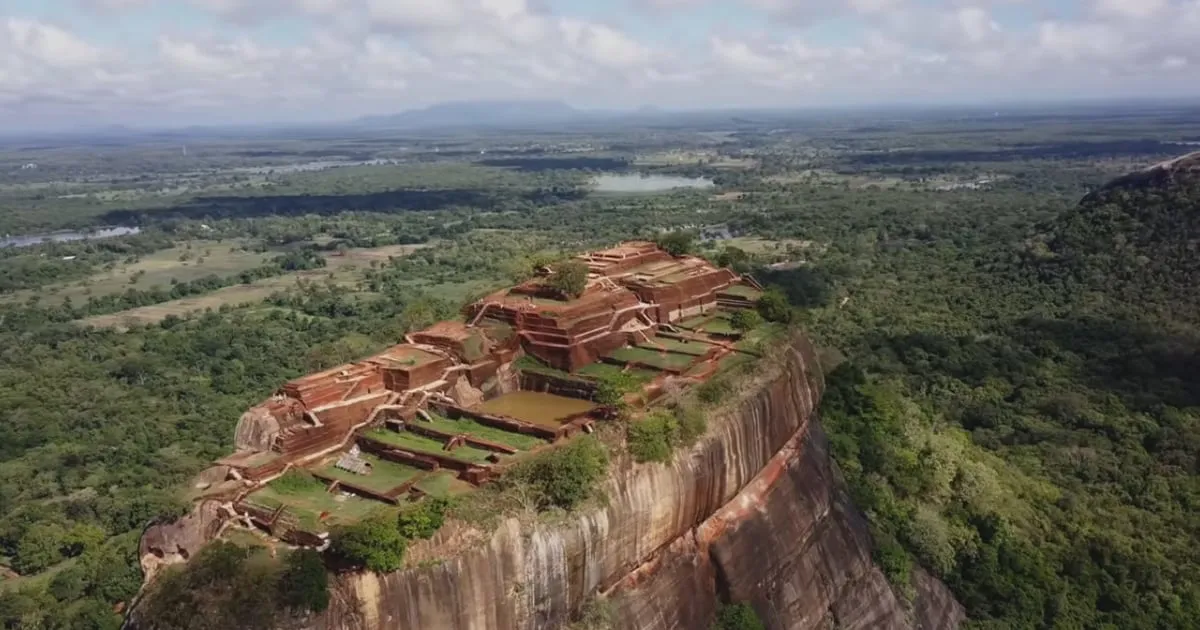 from $29
Guide on the rock
Sigiriya Rock Fortress Private Guided Walking Tour
Already in Sigiriya? A private guide for the 3-hour climb, with the history at each terrace. The $35 ticket is extra.
Check Availability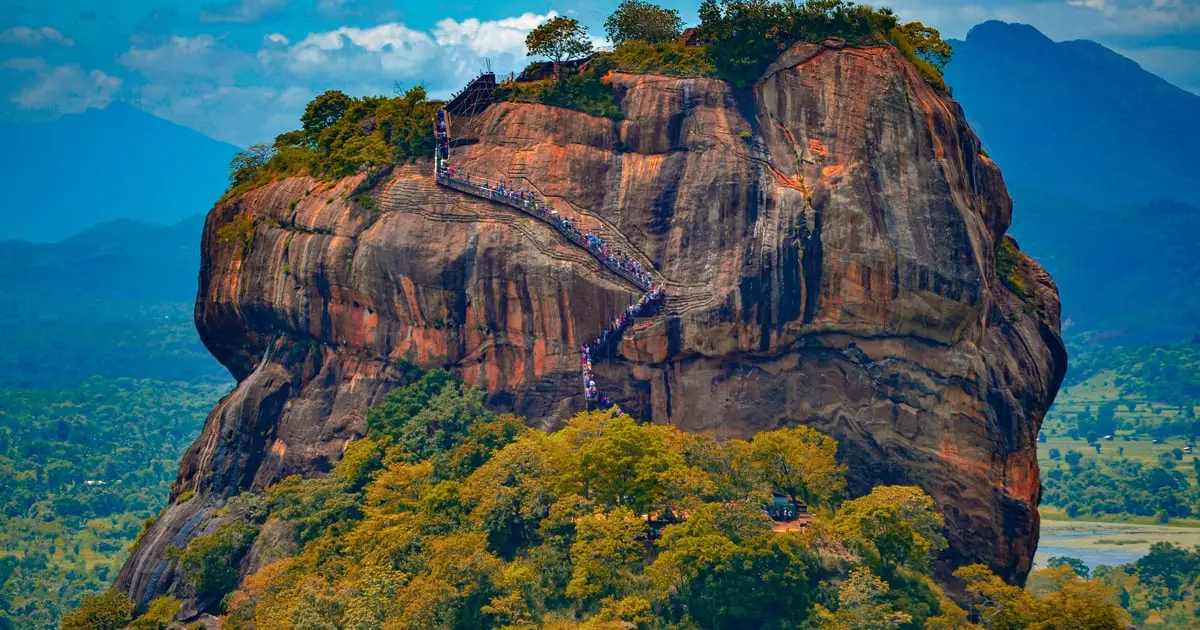 from $22
Two rocks
Sunrise Pidurangala and Sigiriya Rock Tour
Two rocks before breakfast: Pidurangala at sunrise, then Sigiriya with a private driver. Both entry fees are extra.
Check Availability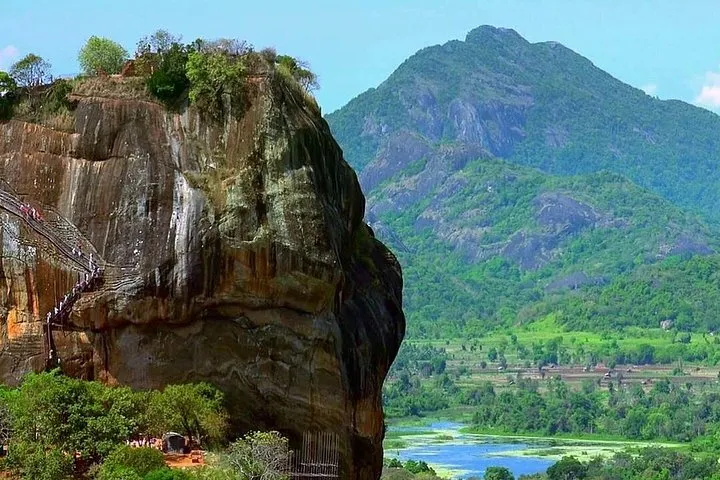 from $30
Top rated
Sigiriya and Dambulla Day Tour from Kandy
A private car and driver-guide from Kandy for Sigiriya and Dambulla, the highest-rated Kandy day tour here. Tickets paid on the day.
Check AvailabilityWhat do you actually walk through before the climb?
You cross the outer moat and ramparts, then the symmetrical water gardens with their pools and fountains, then the boulder garden, and finally the terraced garden at the base of the steps.
Here is the visit order from the entrance to the lion paws.
From the entrance to the base of the rock
The outer moat and ramparts enclose about 70 hectares, so the gardens are a substantial walk, not a doorway. In the 5th century, important guests walked a path with the water gardens on either side as a grand entrance to the more than 1,200 steps up to the palace. You follow the same line.
First come the symmetrical water gardens. These are the flat lawns, rectangular pools and fountain channels that give the site its name. Stand at the central path and look back to see the rock framed between the pools. This is the classic photo stop.
Next the ground rises into the asymmetrical cave and boulder garden. Natural boulders replace the engineered geometry, with covered pathways and the remains of monastic structures between the rocks.
Finally the terraced garden circles the rock itself. Its steps and platforms bring you to the base, where the climb begins. Only the lion's paws survive at the Lion's Gate, each about 3 meters long, and you pass between them. Above, the ascent takes 1.5 to 2 hours and involves approximately 1,200 steps, with the twenty-two surviving Sigiriya Maidens frescoes and the Mirror Wall carrying over 1,800 inscriptions on the way.
The miniature water garden sits on the western side and the summit palace gardens sit at the top, so the water engineering continues well past the pools at ground level.
| Stage | What you see |
|---|---|
| Entrance and moat | Outer moat and ramparts enclosing about 70 hectares |
| Water gardens | Symmetrical lawns, pools and fountain channels |
| Boulder garden | Natural rocks, caves and pathways |
| Terraced garden | Steps and platforms around the rock base |
| Lion's Gate | Paws about 3 meters long, then the 1,200 steps |
Source: Central Cultural Fund.
What are the water fountains in Sigiriya?
They are 5th century fountain jets in the water gardens that still operate in the rainy season, powered only by gravity and underground terracotta pipes.
This is the fact that surprises most visitors. No machinery, and they still run.
How the plumbing works
The system uses hydraulic power, underground conduit terracotta pipes and gravitational force. Water arrives from the nearby Sigiriya tank reservoir, and some is also drained from rainwater pools on top of the rock via a cistern. The slope of the site does the work that a pump would do today.
The CCF says the water garden hydraulic system is still partly functional and the fountains run during the rainy season. Sri Lanka's seasons are the First Inter-Monsoon March to April, the Southwest Monsoon May to September, the Second Inter-Monsoon October to November and the Northeast Monsoon December to February, so the wetter months are your best chance of seeing the jets working.
Do not expect fountain shows on demand. On a dry day the channels are silent and the pools still. The point is that the same pipes worked when the kings lived here and work now, with nothing added.
Water also fed politics. As well as pleasure, the gardens sent a strong message of King Kasyapa's power and ingenuity to anyone who doubted him. The historian's point stands: a visitor who could command running water in the jungle could command anything.
Sources: Central Cultural Fund, Sri Lanka Tourism.
Who built the water gardens and why here?
King Kasyapa built them when he moved his royal capital to Sigiriya in the late 5th century, and he chose a rock rising out of the plain to make a statement.
The short history behind the pools.
Kasyapa, the coup and the capital
King Kasyapa seized the throne after a coup against King Dhatesena and moved the royal capital from Anuradhapura, more than 70km to the north-west. UNESCO dates his reign, as Kassapa I, from 477 to 495.
The CCF says Kashyapa I turned the rock into a royal complex in eighteen years. The rock itself is a granite peak standing some 180 m high above the jungle according to UNESCO, and Sri Lanka Tourism describes it as a lava plug left from an extinct volcano. The name comes from Sinhagiri, meaning Lion Rock.
After Kashyapa's defeat by his half-brother Moggallana in 495 CE, Sigiriya became a Buddhist monastery until the 14th century. The gardens you walk through were built for a court that lasted less than two decades and then served monks for centuries.
The summit plateau covers about 1.6 hectares, and the galleries and staircases emerge from the mouth of a gigantic lion built of bricks and plaster, of which only the paws remain.
Sources: UNESCO World Heritage Centre, Central Cultural Fund, Sri Lanka Tourism.
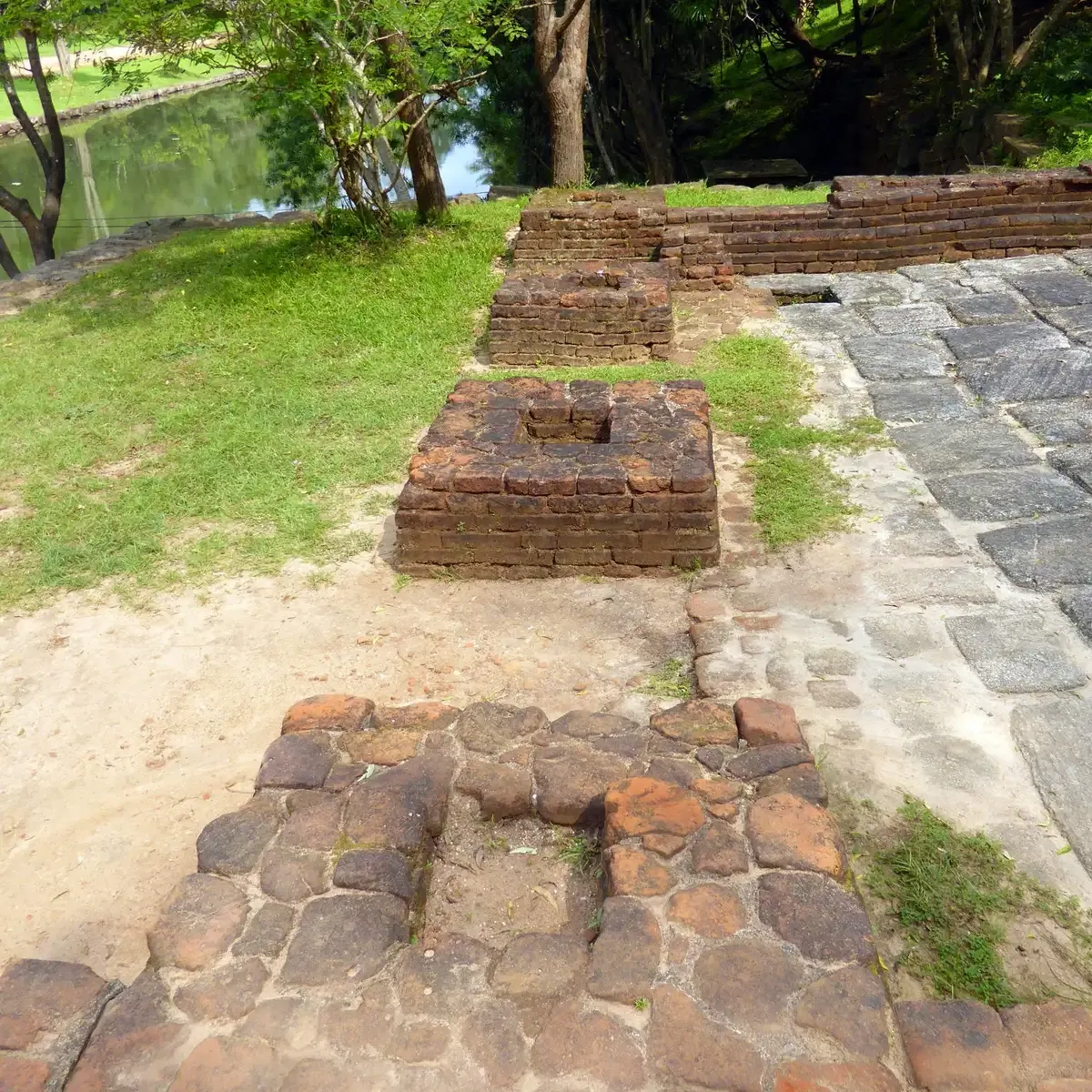
Brick and stone pool walls in the water gardens. Photo: Николай Максимович, CC BY 3.0, via Wikimedia Commons
When should you visit the gardens?
Go early morning or late afternoon, which the Central Cultural Fund recommends for cooler temperatures and better light.
The gardens are exposed, with almost no shade across the lawns.
Heat, light and monkeys
The CCF recommends early morning or late afternoon visits for cooler temperatures and better light. Toque macaque monkeys are active around the gardens, so keep food packed away and do not feed them.
Heritage site ticket counters are open from 7.00 am to 5.00 pm, and the CCF lists Sigiriya Rock Fortress as open 7:00 AM to 5:00 PM. Early entry lets you enjoy the gardens in cool light before the steps.
The Sigiriya Museum is outside the main entrance, opens 8:00 AM to 5:00 PM and takes about 1 hour. Some visitors do the museum after the climb and the gardens on the way out.
Photography permissions are included with CCF tickets, so you can photograph the pools freely. Filming and drone filming need prior written approval from the Central Cultural Fund.
Sources: Central Cultural Fund, Central Cultural Fund eServices, Sri Lanka Tourism.
How much does it cost to enter Sigiriya?
A foreign adult full ticket for Sigiriya is $35 on the Central Cultural Fund price list.
The gardens need no separate ticket. One ticket covers the gardens and the climb.
Ticket prices on the CCF price list
The Central Cultural Fund price list gives the foreign adult full ticket for Sigiriya as $35. The half ticket is $20, and the eTicket terms say the half ticket is for children aged 6 to 12.
The Sigiriya Museum has its own line on the CCF price list at $6.
Prices are quoted in US dollars, and the dollar figure is the stable one. SAARC citizens get a 50% discount on CCF heritage site tickets. Relief tickets are issued only to SAARC tourists, residence visa holders serving the Government of Sri Lanka or an embassy, and students with a valid Green Card or International Student Card, and a valid passport must be shown.
Tickets can be ordered online on the CCF eTicket service and the order is valid for 90 days. Collection is at the heritage site counter by showing the order receipt number. The ticket is valid for a single entry during the relevant day and payments for ordered tickets are not refunded. Heritage site tickets do not cover the strict nature reserves near the sites.
If you add other Cultural Triangle sites, Polonnaruwa is $30 full and $15 half, and the Dambulla museum is $3 full and $1.50 half, with no line for the Dambulla cave temple itself.
Tour prices here are separate from the entry fee. The Sigiriya Rock Fortress Private Guided Walking Tour is $29 per person, the Sunrise Pidurangala and Sigiriya Rock Tour is $22 per person and the Sigiriya and Dambulla Day Tour from Kandy is $30 per person, all with free cancellation 24h. The Sigiriya Lion Rock Hike and Minneriya Safari is $36 per person and lists the Sigiriya entry ticket at $35 per person as a mandatory extra paid on site.
| Ticket | Price |
|---|---|
| Sigiriya foreign adult full | $35 |
| Sigiriya half ticket, children 6 to 12 | $20 |
| Sigiriya Museum | $6 |
| Polonnaruwa full / half | $30 / $15 |
| Dambulla museum full / half | $3 / $1.50 |
Sources: Central Cultural Fund, Central Cultural Fund eServices, Central Cultural Fund tickets.
How do you get to the gardens?
Most visitors reach Sigiriya from a base in nearby Dambulla or on a day trip from Colombo, 169 km away.
There is no ferry or train. It is road travel all the way.
Practical routes
Sri Lanka Tourism gives the Colombo to Sigiriya distance as 169 km, a long day by road. Local buses also link Dambulla and Sigiriya, so carry small notes in rupees.
Many travellers base themselves in Sigiriya or Dambulla to enter at opening time. Day trips also run from Kandy and Colombo if you prefer one base, and the sigiriya rock fortress tour listings cover both.
Pair the gardens with nearby sites if you have days to spare. Dambulla's cave monastery has five sanctuaries, 157 statues and murals covering 2,100 m2, and forest-dwelling Buddhist monks have lived there since the 3rd century BCE. Minneriya National Park, designated in 1997, hosts the dry season elephant gathering from May to October, when many hundreds of elephants can feed on the receding banks of a tank built by King Mahasen in the third century AD.
Sources: Sri Lanka Tourism, UNESCO World Heritage Centre, Sri Lanka Tourism.
Where is the Water Garden Sigiriya resort?
It is a luxury hotel in Sigiriya with 30 villas, a spa, a fitness center and an outdoor pool, and its room rate is published on its own site and booking platforms.
For the readers who came here for the hotel.
What the resort offers
Water Garden Sigiriya presents itself as a luxury Sigiriya hotel with world-class amenities set in lush landscapes. Booking platforms list a spa and wellness center, a fitness center, an outdoor pool and free WiFi. The Michelin Guide notes 30 spacious villas, some surrounded by the gardens' water features.
Searches for Water Garden Sigiriya photos, reviews, owner, contact number and restaurant all point to the hotel's own site and its listing pages, which hold those details. Its average room price is published there and is not stated here.
If you stay there, the ancient gardens at the rock are a short drive away, and going at opening time still gives you the best light on the pools before the climb.
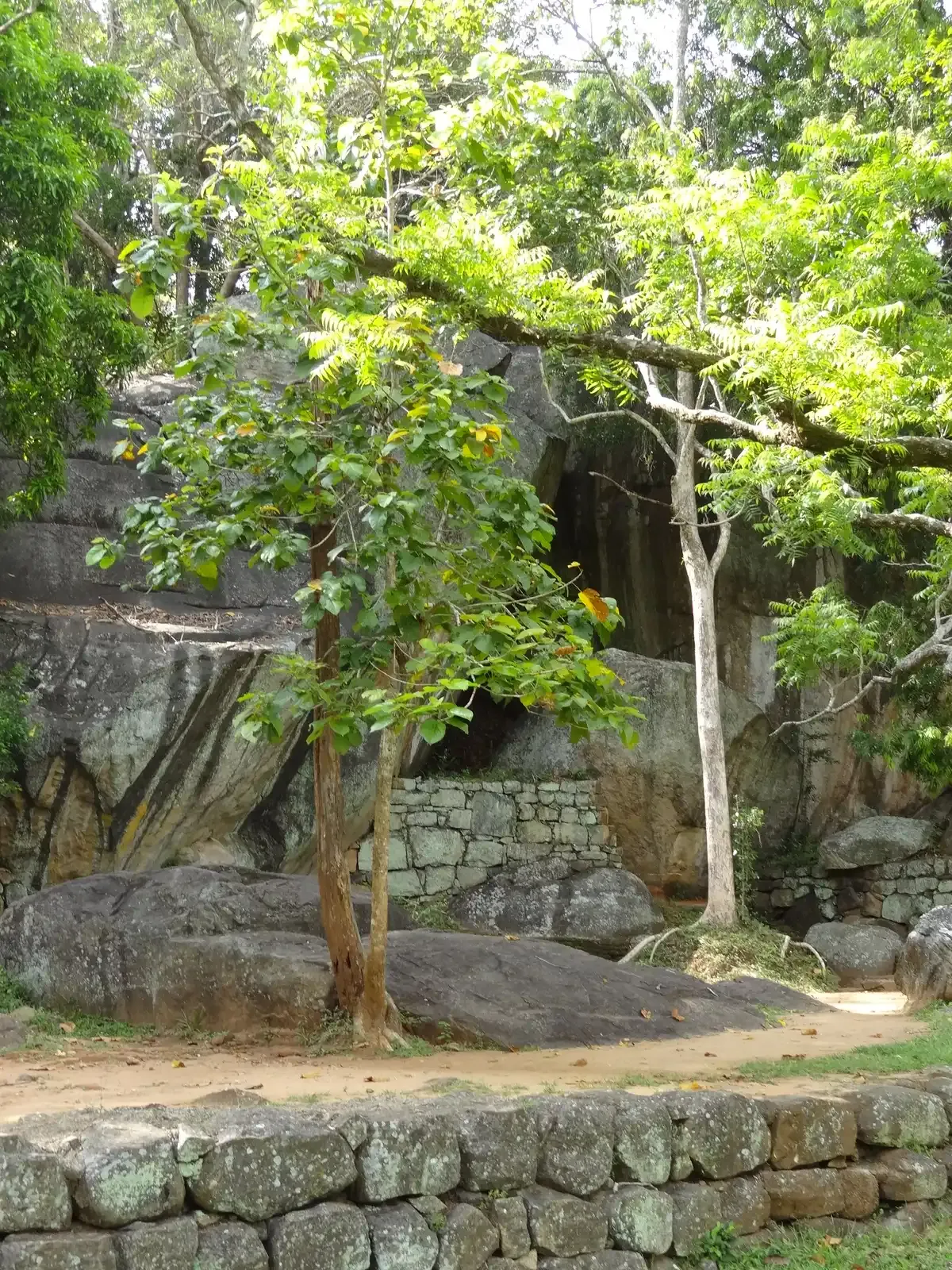
The boulder gardens, between the water gardens and the climb. Photo: Cherubino, CC BY-SA 3.0, via Wikimedia Commons
Sigiriya Water Gardens FAQ
What is the average price of a room at Water Garden Sigiriya?
That refers to the Water Garden Sigiriya resort, a luxury hotel with 30 villas near the rock. Its average room price is not stated here. The hotel publishes its rates on its own website and on booking platforms such as Booking.com. The ancient water gardens at the rock need no hotel, only the standard Sigiriya entry ticket.
What are the water fountains in Sigiriya?
They are 5th century fountain jets in the water gardens at the foot of the rock. They run on gravity through underground terracotta conduit pipes, fed by the Sigiriya tank reservoir and a summit rainwater cistern, and they still work during the rainy season.
What is so special about Sigiriya?
It is a 5th century royal capital on a granite rock, a UNESCO World Heritage Site since 1982, with the best-preserved water gardens in South Asia, 22 surviving frescoes, a mirror wall with over 1,800 inscriptions and a climb of about 1,200 steps.
How much does it cost to enter Sigiriya?
The Central Cultural Fund price list gives a foreign adult full ticket of $35 and a half ticket of $20 for children aged 6 to 12. SAARC citizens get a 50% discount.
Do the water gardens need a separate ticket?
No. The water gardens are inside the Sigiriya rock fortress ticket area, so one ticket covers the gardens, the boulder garden, the terraces and the climb.
When do the fountains actually run?
The Central Cultural Fund says the hydraulic system is still partly functional and the fountains operate during the rainy season. In dry months expect quiet pools and empty channels, so visit in the wetter season if the fountains matter to you.
Does the Sigiriya Museum have its own ticket line?
Yes. The Sigiriya Museum has its own line on the CCF price list at $6. It sits outside the main entrance and takes about 1 hour.
Can I take photos in the water gardens?
Yes. Photography permissions are included with CCF tickets. Filming and drone filming are different and need prior written approval from the Central Cultural Fund.
More Guides
- Colombo to Sigiriya Day Trips
Colombo to Sigiriya in 2027: 169 km by road, the ways to travel and the guided day trips. See which include the rock ticket.
- Dambulla Cave Temple: How to Visit It With Sigiriya
Dambulla Cave Temple 2027: 24 km from Sigiriya, five caves, 153 Buddha statues. Plan the climb, ticket and temple rules for your day trip.
- Is Sigiriya Lion Rock Worth It?
A half-day climb, a UNESCO fortress and a cheaper rock next door. Get the honest 2027 verdict on Sigiriya and plan your visit.