 Sigiriya Lion Rock Tours
Home › Guides › Sigiriya Frescoes: The Painted Maidens and the Mirror Wall
Sigiriya Frescoes: The Painted Maidens and the Mirror Wall
The Sigiriya Frescoes are ancient wall paintings of women, and 21 of them survive today in a sheltered pocket about halfway up the rock. They are over 1,500 years old, painted during the reign of King Kashyapa I.
Quick answer What the Sigiriya frescoes are and where to see them
The Sigiriya Frescoes are wall paintings of women from the 5th century CE, and 21 survive today out of an estimated 500. They sit in a recess on the western face, about a hundred meters above ground, and you pass them on a steel stairway about halfway up the climb.
Key takeaways
- Book a sigiriya rock fortress tour that includes the fresco pocket and the Mirror Wall on the ascent
- One Sigiriya ticket, $35 for a foreign adult, covers the fresco stairway and the Mirror Wall
- Ticket counters open 7.00 am and close 5.00 pm, and the CCF recommends early morning or late afternoon for cooler climbing
- Pair the rock with Sigiriya and Dambulla Day Tour from Kandy to see the cave murals in one day
What are the Sigiriya frescoes famous for?
They are famous as some of the oldest and finest examples of figurative painting in South Asia, showing women from the waist up.
The paintings give Sigiriya its artistic reputation. On your sigiriya rock fortress tour they come early on the climb, before the lion paws and the summit.
What the paintings show
The surviving paintings depict women from the waist up. Some show a golden skin tone, others a bluish-yellow dark hue. Figures are outlined in black, with flowery hair also in black, and a red colour appears in flower petals, clothing, headdresses and jewelry.
Sri Lanka Tourism says the Sigiriya frescoes resemble those at Ajanta in India but show a uniquely Sri Lankan style. That mix of borrowed theme and local hand is part of what makes them stand out.
Why they survived
The paintings sit in a recess on the western face of the rock, about a hundred meters above ground level, protected in a shallow rock shelter. UNESCO notes they are exposed to gradual decay despite that shelter, which is why access is controlled.
Source: Sri Lanka Tourism.
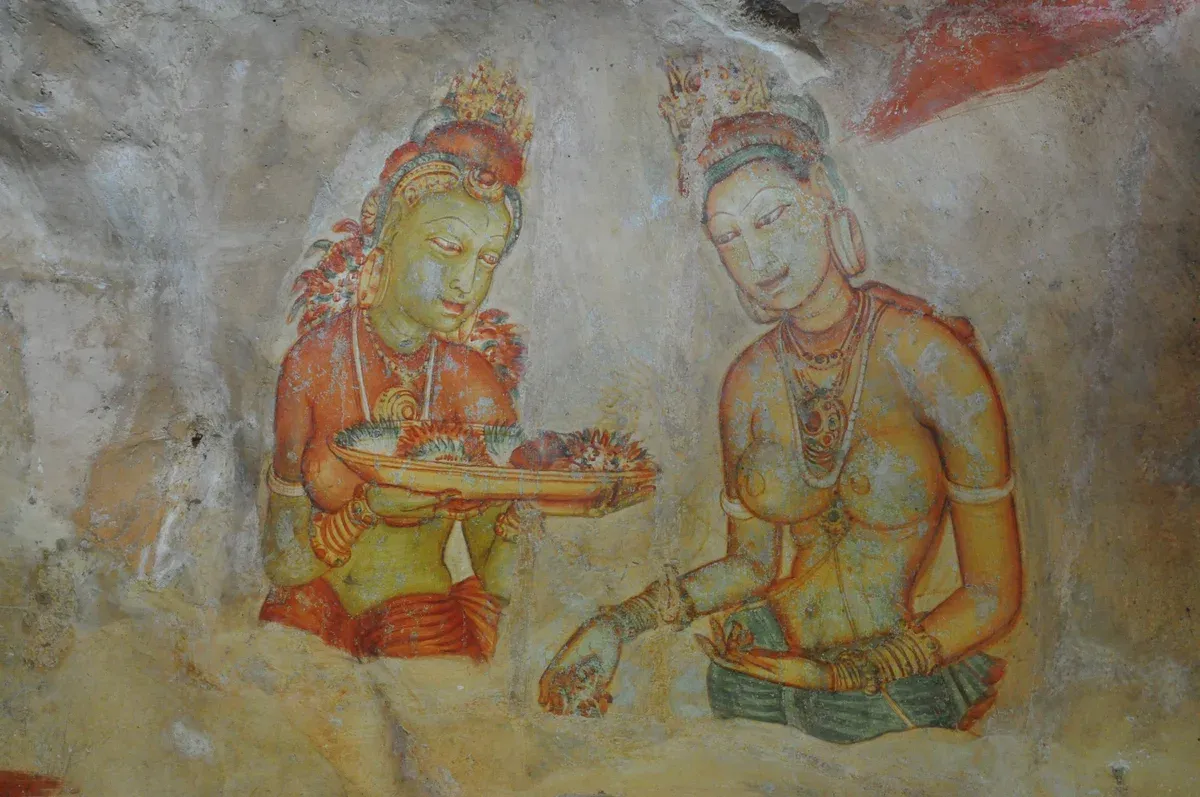
Two of the Sigiriya maidens, among the 22 frescoes that survive in the rock shelter. Photo: Prof Ranga Sai, CC BY-SA 4.0, via Wikimedia Commons
Who drew Sigiriya frescoes?
Nobody knows the painters by name, but the paintings were made during the reign of King Kashyapa I, who ruled from 477 to 495 CE.
The rock's history explains the dating. Kashyapa seized the throne in 477 CE in a coup, walled up his father King Dhatusena alive, and moved the capital from Anuradhapura to Sigiriya fearing his half-brother Moggallana's return.
The king behind the paintings
King Kashyapa built his palace on top of the rock and decorated its sides with colourful frescoes, according to the Culavamsa chronicle. UNESCO calls him the parricidal King Kassapa I, reigning 477 to 495. The CCF dates him to 477-495 CE and says he turned the rock into a royal complex in eighteen years.
After Kashyapa's defeat by Moggallana in 495 CE, Sigiriya became a Buddhist monastery until the 14th century. No individual painter is recorded, so the honest answer is painters of Kashyapa's court, unnamed.
Sources: UNESCO World Heritage Centre, Central Cultural Fund.
How old are the Sigiriya frescoes?
The paintings are over 1,500 years old, made during the reign of King Kashyapa I and generally dated to the 5th century CE.
For a visitor this means you are looking at work older than most of Europe's great cathedrals, and it has survived tropical rain and sun on an exposed rock face.
Dating on the climb
Kashyapa ruled 477 to 495 CE, so the paintings fall in a short window of eighteen years within the 5th century. The fresco pocket and the lion gateway sit on a plateau about halfway up the 180 m rock, reached by stairways cut into the granite.
The site stayed in use long after the court left. It was a Buddhist monastery until the 14th century, and UNESCO inscribed the Ancient City of Sigiriya in 1982 under criteria (ii), (iii) and (iv).
Source: UNESCO World Heritage Centre.
How many frescoes are there in Sigiriya?
21 fresco paintings of women survive today, out of walls that are believed to have once carried around 500 paintings.
The count changes slightly by authority. The Central Cultural Fund says only twenty-two frescoes of the Sigiriya Maidens survive, protected in a shallow rock shelter midway up the rock.
Why so few remain
The walls along the stairway are believed to have once carried around 500 paintings. The pocket on the western face is exposed to gradual decay, and Wikipedia carries a dedicated subsection on a 1967 vandalism incident that damaged the remaining work. What you see today is a fraction of a much larger gallery.
For your visit this means the viewing window is short. You climb a spiral steel stairway into the recess, walk a narrow platform, and come back down. Allow a few minutes of queueing in busy season.
Source: Central Cultural Fund.
Sigiriya frescoes meaning: who are the painted women?
Nobody knows for certain, and the main theories are a royal harem, apsaras or celestial nymphs protecting the fortress.
The identity question is the biggest myth around the Sigiriya Frescoes, and the honest answer is that scholars disagree.
The three readings
One theory says Kashyapa's harem of over 500 concubines inspired the paintings. Other readings see apsaras or celestial nymphs protecting the fortress, a theme comparable to the Ajanta Caves in Maharashtra, India. The painting count near 500 may itself be a clue to the harem theory, though it is not proof.
For the traveller this matters only as a story to carry up the stairs. Guides on a sigiriya rock fortress tour usually give all three readings.
How were the colours made?
The painters used mineral pigments on wet lime plaster, with reds from iron oxide, whites from chalk or lime, yellows from ochre and blacks from charcoal or carbon-based substances.
The technical story explains both the durability and the palette you see in the recess.
Colours on the wall
Some maidens show a golden skin tone, others a bluish-yellow dark hue. Figures are outlined in black with flowery hair also in black. The red colour appears in flower petals, clothing, headdresses and jewelry.
According to one account the walls were first plastered and painted white to symbolize purity, but King Kashyapa wanted a more spectacular presentation, so the gallery of women replaced the plain finish.
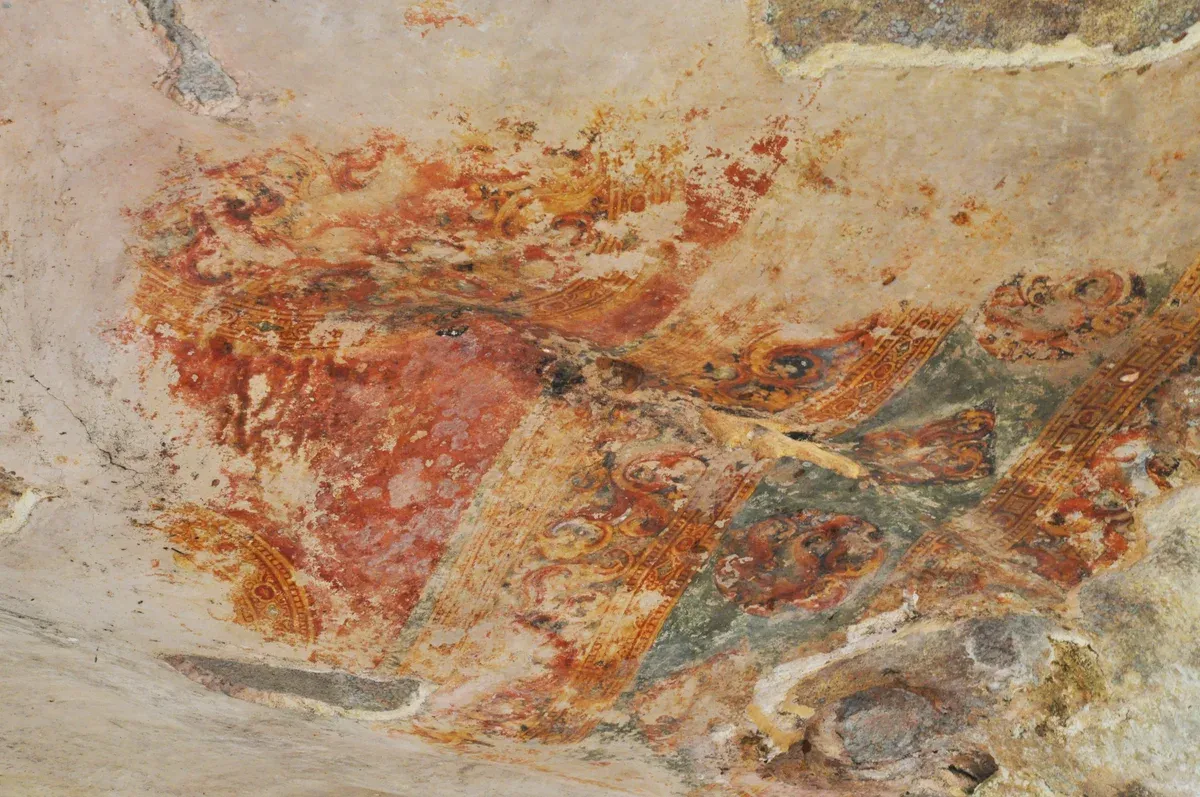
Painted ceiling in the Cobra Hood Cave in the boulder gardens. Photo: Prof Ranga Sai, CC BY-SA 4.0, via Wikimedia Commons
What is the Mirror Wall?
The Mirror Wall is a polished lime plaster wall on the climb that carries over 1,800 documented inscriptions scratched by ancient visitors between the 6th and 14th centuries.
Just past the frescoes you walk beside this wall. Its shine gave it the name, and its graffiti is a thousand years of visitor comments.
The ancient visitor book
The CCF says the wall was finished in polished lime plaster and carries over 1,800 documented inscriptions. Wikipedia says most verses date from the 9th and 10th centuries, and the visitors who wrote them included poets and provincial governors.
So the Mirror Wall is not a defensive wall. It is an ancient comment wall, and reading a few of the translated verses on the way up is one of the quiet pleasures of the climb.
Source: Central Cultural Fund.
Where the Frescoes Are on the Climb
The frescoes sit in a shelter midway up the west face, reached after the gardens and before the Lion Gate. The Mirror Wall gallery runs on from the frescoes towards the lion paws.
- 1 Ticket control, west gateWhere the visit starts.
- 2 Cobra Hood CavePainted ceiling in the boulder gardens.
- 3 Fresco shelter22 surviving frescoes of the Sigiriya Maidens.
- 4 Lion GateThe two lion paws at the last staircase.
- 5 Summit palaceThe end of the climb.
Numbers match the pins on the map.
Coordinates: OpenStreetMap. The garden pin marks the middle of the water garden axis. Dashed lines join the stops in order, not the footpath.
Where do the frescoes sit on the climb and when should you see them?
The fresco pocket sits on a plateau about halfway up the 180 m rock, on the western face about a hundred meters above ground, and the CCF recommends early morning or late afternoon for cooler temperatures and better light.
Knowing the position helps you plan your day. You reach the paintings well before the summit, so even a slow climber sees them early.
The route to the paintings
The CCF says the full ascent takes 1.5 to 2 hours and involves approximately 1,200 steps. You cross the water gardens, pass the Mirror Wall, climb the spiral stairway into the fresco recess, then continue to the lion paws, each about 3 meters long, and the summit plateau of about 1.6 hectares.
Ticket counters are open from 7.00 am to 5.00 pm, and the site is listed as open 7:00 AM to 5:00 PM. Start early rather than cutting it close.
Seeing them well
Early morning gives softer light on the western face and thinner queues at the narrow stairway. Bring water for the 1,200 steps and keep your ticket handy, since the stairway attendant checks it. The CCF tells visitors to follow officers' instructions about forest animals like wasps, which sometimes gather near the path in dry season.
Sources: Central Cultural Fund, Central Cultural Fund eServices, Central Cultural Fund tickets.
What does it cost and what are the rules at the frescoes?
The foreign adult full ticket for Sigiriya is $35 per the Central Cultural Fund price list, the half ticket is $20 for children aged 6 to 12, and photography is included with the ticket while drones need written approval.
The frescoes are inside the rock fortress, so one Sigiriya ticket covers them. There is no separate charge for the fresco stairway.
Tickets and hours
Per the CCF price list, the foreign adult full ticket is $35 and the half ticket is $20. The eTicket terms say the half ticket is for children aged 6 to 12, and SAARC citizens get a 50% discount on heritage site tickets. The Sigiriya Museum has its own line on the CCF price list at $6.
Tickets can be ordered online on the CCF eTicket service, the order is valid for 90 days, and you collect the physical ticket at the site counter by showing the receipt number. The ticket is valid for a single entry during the relevant day, and payments for ordered tickets are not refunded.
Rules that touch the frescoes
Photography permissions are included with CCF tickets. Professional filming and drone filming need prior written approval from the Central Cultural Fund. Visitors must follow the special rules and regulations, traditions and procedures of sacred archaeological heritage sites, and the instructions of CCF officers.
On most tours here the Sigiriya entry fee is not in the tour price and is paid on the day, so bring cash or a card for the counter alongside the tour fee. The All-Inclusive Sigiriya and Dambulla Day Tour from Colombo, the Sigiriya Lion Rock Fortress Entry eTicket with Guide and the Sigiriya Entrance Ticket with Guided Tour include the ticket, and the Sigiriya and Dambulla Day Trip from Colombo with Safari includes it only on its all-inclusive option.
Sources: Central Cultural Fund, Central Cultural Fund eServices, Central Cultural Fund tickets.
Tours That Fit
Day trips that include the fresco climb and the Mirror Wall on the ascent.
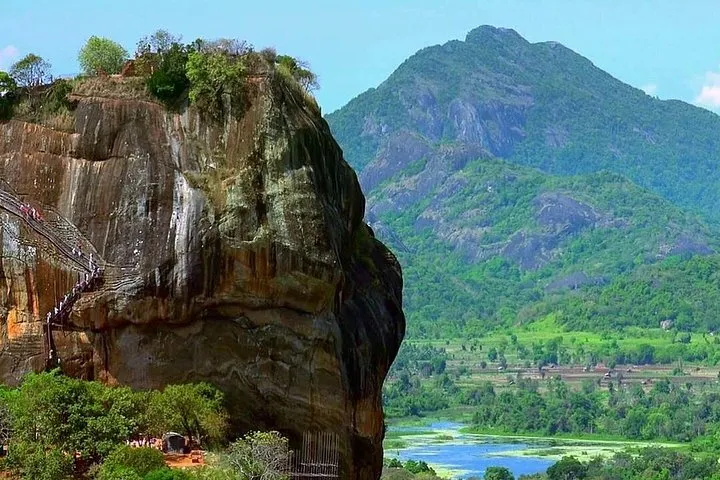 from $30
Top rated
Sigiriya and Dambulla Day Tour from Kandy
A private car and driver-guide from Kandy for Sigiriya and Dambulla, the highest-rated Kandy day tour here. Tickets paid on the day.
Check Availability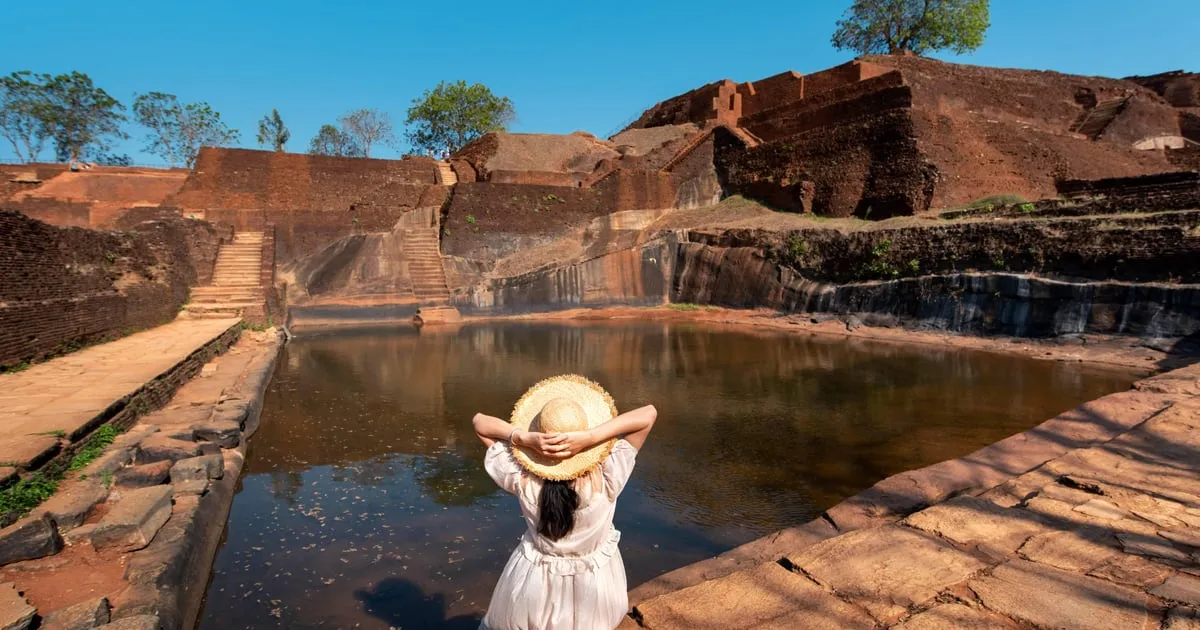 from $36
Most booked
Sigiriya and Dambulla Day Trip from Colombo with Safari
The most-booked day trip from Colombo: Sigiriya, the Dambulla caves and an optional jeep safari in one long 14-16-hour day.
Check AvailabilityWhat is the most famous fresco painting?
The most famous works are the Sigiriya Maidens themselves, the surviving portraits of women that give the whole gallery its name.
No single panel has a separate famous name in the sources. The fame belongs to the group of painted women seen together in the recess.
What to look for
Look for the contrast between the figures with a golden skin tone and those with a bluish-yellow dark hue, and for the black outlines and flower-filled hair. The red in petals, clothing, headdresses and jewelry shows the painter's palette at its best.
If you want a second famous painting day, the Dambulla cave monastery nearby holds murals covering 2,100 m2 across five sanctuaries with 157 statues, inscribed by UNESCO in 1991.
Source: UNESCO World Heritage Centre.
What is so special about Sigiriya?
Sigiriya is a UNESCO listed World Heritage Site where a 5th century palace, painted gallery, Mirror Wall graffiti, lion gateway and engineered gardens sit on and around one 180 m granite rock.
The frescoes are one layer of a whole ancient city. For the day visitor the rock packs art, history and a climb into a few hours.
What one ticket includes
The outer moat and ramparts enclose about 70 hectares and the summit plateau covers about 1.6 hectares. The CCF divides the western gardens into water gardens, boulder gardens and terraced gardens, and says the water garden hydraulic system is still partly functional, with fountains that run during the rainy season. UNESCO describes galleries and staircases emerging from the mouth of a gigantic lion built of bricks and plaster.
The site was used as a Buddhist monastery until the 14th century and is considered one of the best preserved examples of ancient urban planning. Sri Lanka Tourism calls the rock a lava plug left from an extinct volcano.
Planning the day
The Sigiriya Museum sits outside the main entrance and takes about 1 hour, and it is listed as open 8:00 AM to 5:00 PM. The CCF recommends early morning or late afternoon visits. Sri Lanka Tourism gives the Colombo to Sigiriya distance as 169 km.
If you have extra days, Minneriya National Park, designated in 1997, hosts an elephant gathering from May to October when many hundreds of elephants feed on the receding reservoir banks.
Sources: UNESCO World Heritage Centre, Central Cultural Fund, Sri Lanka Tourism, Sri Lanka Tourism.
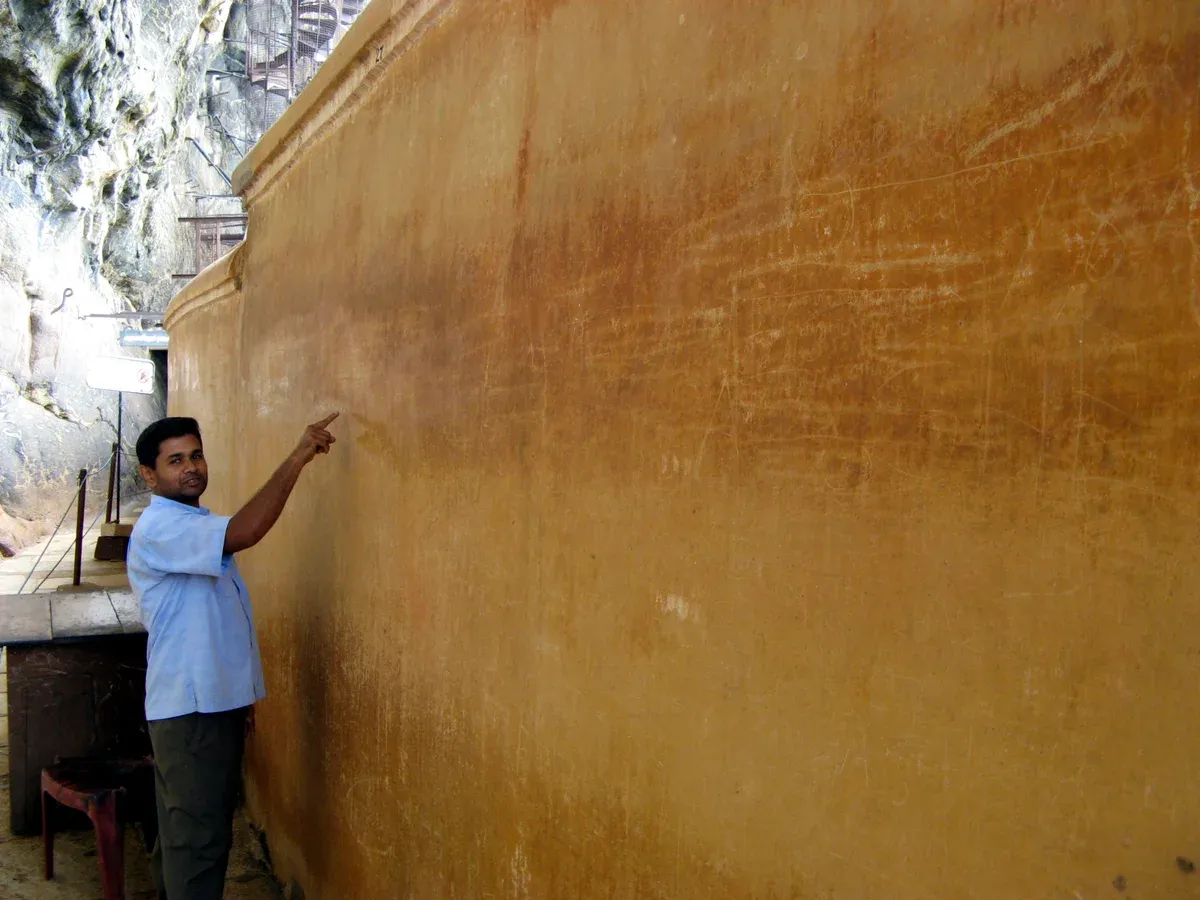
A site guide pointing out the verses scratched into the Mirror Wall. Photo: Michael Gunther, CC BY-SA 4.0, via Wikimedia Commons
Sigiriya Frescoes FAQ
Can I take photos of the Sigiriya frescoes?
Yes. Per the Central Cultural Fund, photography permissions are included with tickets, while professional filming and drones need prior written approval. See the climbing route on the sigiriya rock fortress tour listings.
Do I need a special ticket for the fresco pocket?
No. One Sigiriya ticket covers the whole climb including the fresco stairway. The foreign adult full ticket is $35 per the CCF price list.
Are the Sigiriya frescoes really frescoes?
Yes in the technical sense. The Sigiriya maidens use the Buon Fresco technique, pigments on wet lime mortar, which is the more durable of the two classical methods.
How fit do I need to be to see the frescoes?
The fresco pocket sits about halfway up the rock, reached by a spiral stairway, and the full ascent takes 1.5 to 2 hours over approximately 1,200 steps per the CCF. You can see the paintings without going to the summit.
Why do different sites say 21 or 22 frescoes survive?
One source counts 21 surviving paintings of women, while the Central Cultural Fund says twenty-two frescoes of the Sigiriya Maidens survive in the shelter midway up the rock. Either way you are seeing a small fraction of an estimated original 500.
What is written on the Mirror Wall?
Over 1,800 documented inscriptions, most verses dating from the 9th and 10th centuries, written by visitors including poets and provincial governors between the 6th and 14th centuries.
Which tour covers the frescoes and the Dambulla murals in one day?
The Sigiriya and Dambulla Day Tour from Kandy does both in 10-12 hours at $30 per person with free cancellation 24h.
More Guides
- Guided Walking Tours of Sigiriya Rock Fortress
Sigiriya guided tour options for 2027: private guides and ticket bundles, the 1,200 step route and how tickets work. Check availability for your guide.
- Colombo to Sigiriya Day Trips
Colombo to Sigiriya in 2027: 169 km by road, the ways to travel and the guided day trips. See which include the rock ticket.
- Dambulla Cave Temple: How to Visit It With Sigiriya
Dambulla Cave Temple 2027: 24 km from Sigiriya, five caves, 153 Buddha statues. Plan the climb, ticket and temple rules for your day trip.